Chimney Repairs Basingstoke
Chimney repairs that protect your roof, reduce leaks, and keep your property sound.
Chimney Repairs for Basingstoke Properties
Chimney repairs matter when masonry, mortar, flashing, or the chimney top begins to fail and water can enter the roof structure. This page explains how chimney repair work is assessed, what may be included, and how a suitable scope is set before work goes ahead.
For properties in Basingstoke, the right response depends on the condition found on site rather than on a one-size-fits-all approach. A careful inspection helps identify whether the issue is localised and repairable or whether a broader solution is more appropriate.
Small signs of damage can lead to bigger problems if they are left unresolved, so chimney issues are best checked early. A prompt repair can help limit further water ingress and reduce the chance of related roof deterioration.
Even when the visible fault seems minor, the source of the problem may be higher, lower, or beside the chimney itself. That is why a clear assessment is important before any work is specified.
A chimney repair should address the cause of the defect, not just the symptom. That may mean dealing with weathered joints, defective leadwork, loose masonry, or deterioration at the chimney top.
The aim is to restore a sound, weather-resistant finish that works with the surrounding roof details. Properly chosen repairs are usually based on what the chimney needs now, rather than on guesswork.
Where a chimney has more than one issue, the repair plan may need to combine several tasks. A sensible scope can help avoid repeated call-backs and make the finished work more durable.
The most suitable repair method depends on what is found during inspection, how far the damage has progressed, and how much of the chimney assembly is affected. That is why the first step is always to establish the condition accurately.
For related roof junctions, coverings and drainage, review our Basingstoke roofing contractors.
Chimney Repair Work at a Glance
- Roof survey and visible-condition check
- Clear explanation of the likely cause
- Appropriate material and access considerations
- Written quotation for the proposed scope
How We Assess Chimney Repairs
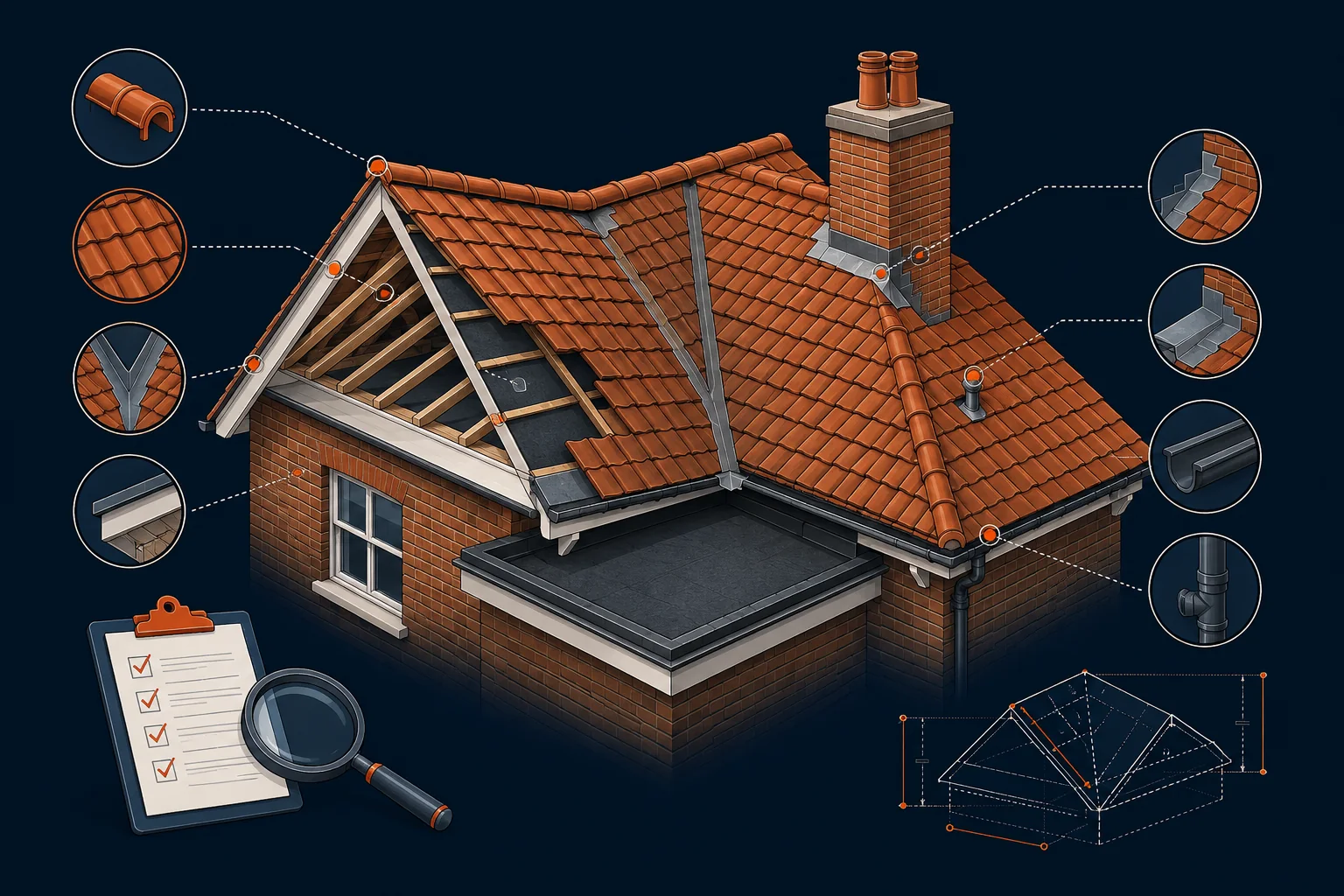
Before repair or replacement work is specified, the chimney should be checked as a whole rather than in isolation. That means looking at the masonry, mortar joints, flashing, chimney top, and any signs of movement or water entry.
A good assessment also considers how the chimney meets the rest of the roof. The goal is to identify the actual defect, understand its likely cause, and set out only the work that is needed.
Inspect before specifying the work
Inspection before specification helps prevent unnecessary work and missed defects. A visible stain inside the property, for example, may be linked to a fault at the chimney, but the exact entry point still needs to be confirmed.
The safest approach is to trace the problem carefully before deciding whether the repair is minor, extensive, or structural.
A chimney can show more than one type of wear at once, especially where mortar, leadwork, and the top courses have aged differently. Checking each element separately helps build a complete picture of condition.
This approach supports a practical recommendation, because a repair that only treats one weakened part may not solve the underlying issue.
Assessment should also take account of how accessible the chimney is and how safely the work can be carried out. Access can influence both the method and the level of disruption required.
Where access is more challenging, the inspection still needs to be thorough enough to support a clear and realistic repair plan.
What guides the quotation
A quotation is guided by what the inspection reveals, including the extent of damage and the type of repair needed. The more detailed the findings, the clearer the scope can be.
Material choice, access, and the amount of labour involved all help shape the written price. A proper quotation should reflect the actual work required, not a generic estimate.
Assessment focus
- Inspect the complete stack
- Check the roof junction
- Match the work to the fault
Written scope
- Visible condition
- Safe access
- Material specification
- Relevant exclusions
What Chimney Repairs Can Cover
Chimney repairs can range from minor maintenance to more involved restoration, depending on condition. The right scope may include targeted repairs to flashing, repointing, renewal of damaged components, or more substantial work where deterioration is advanced.
A suitable response is chosen after the chimney has been assessed in context. If the damage is localised, a focused repair may be enough; if the chimney is widely worn or unstable, a broader intervention may be needed.
Some chimney faults can be addressed with relatively limited work, while others call for a more complete repair strategy. The decision depends on how much of the structure is affected and whether the surrounding roof details are also compromised.
A careful scope helps ensure the finished repair deals with the whole problem rather than only the most obvious symptom.
Where a chimney is still structurally sound, targeted maintenance may extend its working life and improve weather protection. That can be a sensible option when the damage is limited and the chimney does not show wider signs of failure.
If the inspection finds broader deterioration, the recommended work may need to go beyond patching. The key is matching the repair method to the condition found on site.
- Masonry, mortar joints, pots and flaunching are considered as parts of one exposed structure.
- The flashing and roof-to-stack junction are checked for a controlled route away from water.
- Local repair, capping or rebuilding is matched to the actual extent of deterioration.
Common Chimney Faults
Common chimney faults often start with gradual wear rather than sudden failure. Mortar joints can open up, lead details can deteriorate, and the top of the chimney can weaken over time.
These issues may allow water to enter the roof structure or the masonry itself, so early attention is usually easier than waiting for the damage to spread.
Some defects are easiest to identify once the chimney is inspected at close range. Cracked joints, loose materials, and visible weathering can all point to a repair need.
Where a fault has been left in place for some time, there may also be hidden damage that is not immediately obvious from ground level.
A chimney fault should be treated according to its cause, not only its appearance. For example, a damp patch may be a sign of flashing failure, deteriorated masonry, or problems at the chimney top.
This is why a proper diagnosis matters before repair work begins.
- Open joints, cracked bricks or weathered masonry faces
- Loose pots or deteriorated flaunching around the chimney top
- Movement at the junction between the stack and roof covering
Chimney Flashing and Flaunching
Flashing and flaunching are key parts of a watertight chimney detail, and both deserve careful attention during an inspection. If either has failed, water can find its way into the roof or down into the chimney structure.
Repairs in these areas need to be compatible with the surrounding roof materials and the condition of the masonry they meet.
Lead flashing is often one of the first places to look when a chimney is leaking. Cracking, separation, or poor detailing can all create a route for water entry.
Because flashing ties the chimney to the roof covering, a repair needs to restore a secure and weather-resistant junction rather than just conceal the problem.
Flaunching at the top of a chimney helps form a protective finish around the pot or terminal area. If it breaks down, water can penetrate and the top of the stack may deteriorate further.
Good repair work restores that protective layer so the chimney crown area sheds water properly.
When flashing or flaunching has failed, the visible damage may be only part of the issue. The surrounding masonry and roof junction should also be checked for related wear.
A repair plan should therefore cover the full point of entry, not just the surface defect that first drew attention to it.
- Step and cover flashing seated securely into the masonry
- Flaunching formed with suitable falls and without open cracking
- Sound interfaces between the stack, tiles or slates and surrounding mortar
Tracing a Chimney Leak
Tracing a chimney leak starts with identifying where water is entering and where it is showing inside the property. Those two points are not always the same, so the path of moisture needs to be followed carefully.
A systematic check of the chimney, roof junction, and nearby materials helps narrow down the cause before repair work is recommended.
Leaking chimney symptoms can be intermittent, which makes diagnosis more difficult. A dry spell may hide the issue, while wet weather can reveal it more clearly.
That is another reason a leak should be assessed methodically, with the likely entry points considered one by one.
Sometimes the leak source is a small defect in a critical junction rather than a large visible gap. Even minor separation in leadwork or mortar can be enough to allow water through.
A careful trace helps avoid unnecessary replacement work when a focused repair would be sufficient.
If the chimney is only one part of a wider roof issue, the leak trace should consider the surrounding coverings as well. Water can travel before it becomes visible inside the building.
The inspection therefore needs to look beyond the stain or damp patch and establish the real route of entry.
- Direction and severity of rainfall when the symptom appears
- Moisture route through the stack, roof space or adjoining timbers
- Condition of masonry, flaunching and the roof-to-chimney junction
Repointing, Capping or Rebuilding
Repointing may be suitable when mortar joints have weathered but the chimney remains otherwise stable. It renews the joints and helps restore the integrity of the masonry.
This type of work is most useful when deterioration is limited to the mortar rather than the whole stack.
Capping can be appropriate where a chimney is no longer in active use and needs protection from rain entry. The decision depends on the condition of the stack and what outcome is needed.
A rebuild is usually considered when the structure is too deteriorated for smaller repairs to provide a dependable result.
Rebuilding may be necessary if the chimney has significant instability, heavy decay, or widespread structural failure. In those cases, patch repairs may not be enough to create a lasting solution.
The extent of rebuilding should be based on the condition found during inspection, including whether the full stack or only part of it is affected.
The choice between repointing, capping, and rebuilding comes down to what will make the chimney safe, weather-resistant, and appropriate for its current condition. Each option serves a different level of need.
A sound recommendation should explain why the chosen approach fits the chimney rather than offering the same answer for every case.
- Local repointing where bricks remain stable and joints have weathered
- Capping or ventilation arrangements for a redundant chimney
- Partial or full rebuilding where movement or masonry failure is extensive
A Chimney Repair Scope Based on Its Condition
Condition
Condition is the starting point for any chimney recommendation. A stack that is generally sound may only need limited work, while one with broader decay may require a more substantial response.
The assessment should distinguish between surface wear and more serious structural concerns so the repair scope is proportionate.
Access
Access affects how the chimney can be inspected and repaired safely. It may influence the equipment used, the time needed, and the areas that can be reached properly.
Good access planning supports a better inspection and a more accurate repair quotation.
Specification
Specification should state what is to be repaired, renewed, or left in place. Clear wording helps ensure the work matches the findings and avoids uncertainty once the job starts.
A good specification also identifies any limits to the repair, especially where the chimney’s condition means a full rebuild or additional work may be required.
Chimney Repairs FAQs
A chimney can leak when flashing fails, mortar joints open up, flaunching breaks down, or the masonry itself becomes porous. Water may then travel before it appears as a stain inside, so the visible damp patch is not always the true entry point.
That is why the leak should be traced carefully around the chimney and nearby roof details before any repair is chosen.
Flaunching is the mortar finish at the top of a chimney that helps secure the pot area and shed water away from the stack. When it cracks or loosens, moisture can enter and damage the top of the chimney.
If the surrounding structure is still sound, damaged flaunching can often be repaired rather than replaced more extensively.
Yes, chimney flashing can often be repaired if the problem is limited to the flashing itself or its immediate junction with the roof. A repair may involve restoring the seal, replacing defective sections, or correcting the detailing.
If the surrounding masonry or roof covering is also failing, the repair may need to be broadened so the junction remains weather-tight.
A chimney may need rebuilding when the structure is unstable, badly deteriorated, or no longer suitable for smaller repairs. Rebuilding is more likely where the masonry has suffered extensive decay or movement.
The decision should follow a proper inspection, because a chimney that looks poor from a distance may still be repairable in parts.
Ask about chimney repairs
A written quotation for chimney repairs should follow a clear inspection, so the recommended work is based on what has actually been found. That helps align the scope with the condition of the chimney and the roof junction.
The quotation may also reflect access requirements, the materials needed, and whether the job is a focused repair or a larger rebuild. Those factors all affect the amount of work involved and the final specification.
If you want chimney repairs assessed properly, start with a clear inspection and a written scope that matches the condition found. That gives you a better basis for deciding whether the work should be limited, expanded, or staged.
Basing Roofworks can then set out the repair approach in practical terms, so you understand what is being addressed and why it is needed.