New Roofs & Roof Replacement Basingstoke
New roofs and roof replacement services that give your property a reliable, well-planned start.
New Roofs & Roof Replacement for Basingstoke Properties
New roof and roof replacement work becomes relevant when a roof is beyond routine repair, when repeated issues keep returning, or when you want a full re-roof planned around the condition found on site. This page explains how the service is approached, what should be checked first, and how the scope is shaped before any work is specified.
A roof replacement should be based on what the existing roof is actually doing, not on guesswork. That means looking at the covering, the structure beneath it, the flashings, the roof edges and the general condition of the roof as a whole.
Some roofs can be restored with targeted repairs, while others need a broader replacement because the issues are widespread or recurring. The right approach depends on how far the problems extend and whether the roof is still performing as intended.
A clear replacement plan helps avoid unnecessary work and makes it easier to compare options. It also gives you a practical route to deciding whether to repair, re-cover or replace the roof in stages or as one project.
For repair, inspection and roofline options, return to our Basingstoke roofing company overview.
Roof Replacement Topics at a Glance
- Roof survey and visible-condition check
- Clear explanation of the likely cause
- Appropriate material and access considerations
- Written quotation for the proposed scope
How We Plan a Roof Replacement
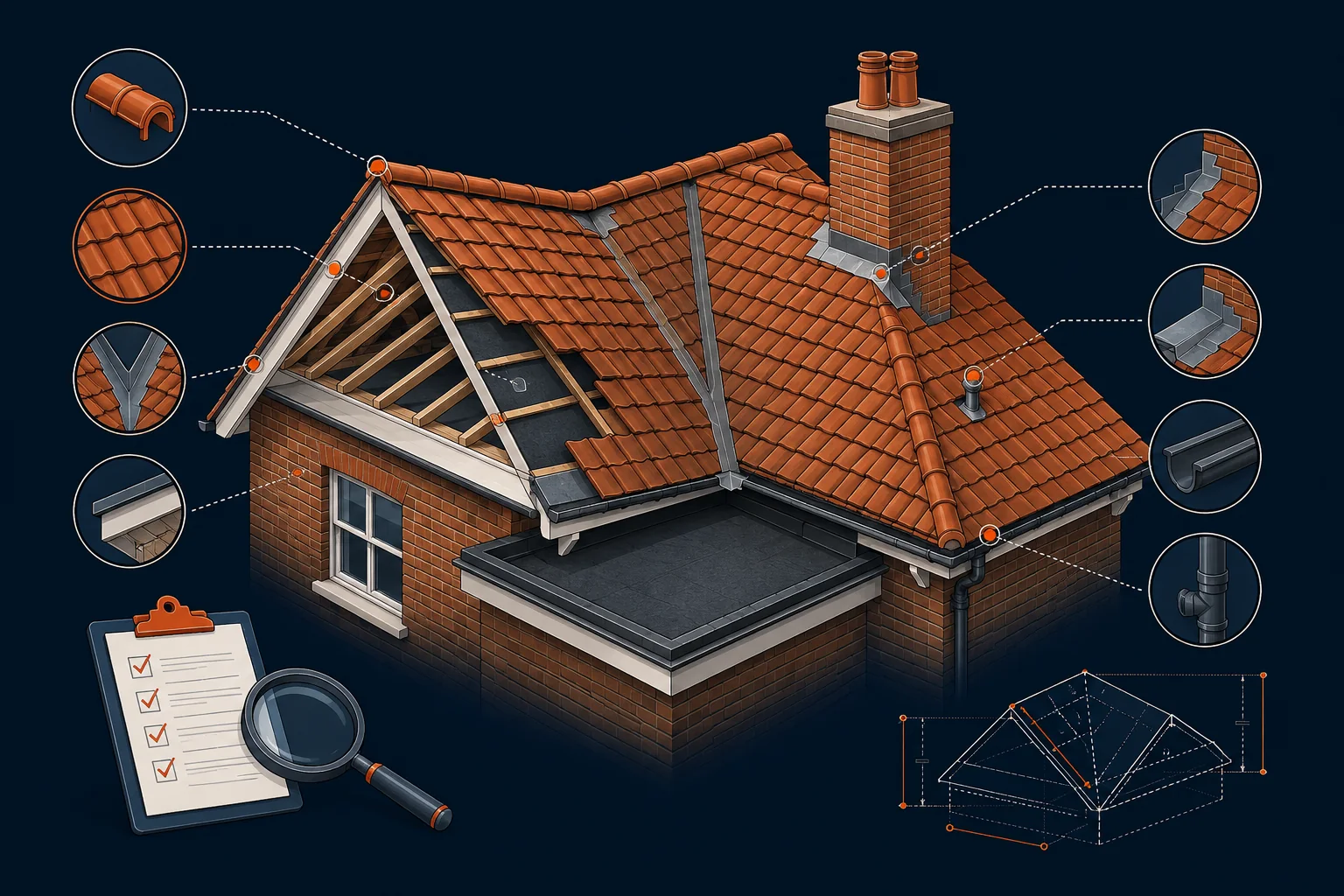
Before repair or replacement is specified, the roof should be assessed for the cause of the problem, the visible condition of the covering, and any signs that the issue has reached deeper parts of the roof. A proper assessment also considers whether the work is limited to a small area or likely to involve more of the roof than first expected.
Inspect before specifying the work
Inspecting before specifying the work helps separate surface defects from more serious deterioration. That distinction matters, because a small visible fault may be part of a larger pattern that only becomes clear once the roof has been properly checked.
The inspection should also consider how the roof has aged overall and whether previous repairs have remained effective. If a roof has needed repeated patching, the most sensible answer may be a replacement rather than another short-term fix.
It is also important to identify any related details that affect performance, such as joints, edges and transitions. These areas often influence whether the roof can be repaired cleanly or whether a fuller scope is more appropriate.
What guides the quotation
A quotation is guided by the findings from the inspection, the size and complexity of the roof, and the amount of work needed to complete the job properly. Material choices and the scope of associated items can also affect the final specification.
Assessment focus
- Assess the wider roof condition
- Compare repair with replacement
- Specify the complete roof build-up
Written scope
- Visible condition
- Safe access
- Material specification
- Relevant exclusions
What to Consider Before a New Roof
The right service scope depends on what the roof condition reveals once it has been checked. In some cases that means a straightforward repair plan; in others it means a full re-roof with a written specification that matches the issues found.
Before committing to a new roof, it helps to confirm whether the existing roof is failing in a localised area or across a wider span. That answer usually determines whether the work can stay limited or needs to cover the whole roof.
A good scope should also account for any work that supports the new covering, not just the visible outer layer. That way the replacement is planned as a complete job rather than a series of disconnected tasks.
- The decision starts with whether deterioration is localised or spread across the roof covering.
- The specification must account for structure, underlay, battens, ventilation and roof details.
- Access, waste removal and the chosen covering all influence the written replacement scope.
Repair or Replace the Roof?
Repair is usually the better option when the damage is limited and the rest of the roof is still in sound condition. Replacement becomes more relevant when the defects are repeated, widespread or linked to broader wear.
A roof that keeps failing in different places may be telling you that patch repairs are no longer economical or dependable. In that situation, a more complete replacement can provide a clearer long-term solution.
The decision should be made from inspection findings, not from age alone. Even a roof that looks serviceable from a distance may have hidden issues that change the recommendation once checked properly.
- Focused repair where defects are isolated and the wider covering remains sound
- Replacement discussion where deterioration is widespread across a roof slope
- Consideration of recurring faults, age and cumulative repair cost
What a Re-roof Can Involve
A re-roof can involve removing the existing covering and then rebuilding the roof surface in a planned sequence. The exact contents of the job depend on the roof condition and the specification agreed in advance.
Depending on what is found, the work may also include associated components that affect weather protection and finishing details. This is why the scope should be written clearly before the project starts.
Where a fuller replacement is needed, it is sensible to set out what is included and what is not included. That makes it easier to understand the work, compare quotations and avoid assumptions later on.
- Strip or carefully salvage the existing covering as appropriate
- Inspect and repair the deck, rafters, battens and supporting details
- Install underlay, ventilation, new covering and compatible roof junctions
What Affects New Roof Cost
New roof cost is shaped by the size of the roof, the amount of work involved and the specification chosen. A larger or more complex roof generally requires more labour and materials than a simple, straightforward one.
The condition of the existing roof also affects cost, because hidden deterioration can change the amount of preparation and rebuilding needed. If more of the roof has to be addressed, the scope and price naturally change with it.
Material choice is another major factor, since different coverings and associated products vary in both appearance and installation requirements. A written quote should reflect the selected specification rather than a generic allowance.
Access and working conditions can also influence the quotation, especially where the roof is awkward to reach or needs additional setup. The aim is to price the actual job accurately, based on the property and the work involved.
- Measured area, pitch, roof shape and number of complex junctions
- Selected covering, fittings, insulation and ventilation requirements
- Scaffolding, waste handling and repairs discovered after stripping
Choosing a New Roof Covering
Choosing a new roof covering starts with the practical requirements of the roof, not with appearance alone. The right covering should suit the structure, the specification and the performance expectations for the project.
Different coverings can suit different replacement goals, so it helps to compare durability, maintenance needs and the level of work each option requires. That comparison should happen after the roof has been inspected, not before.
The chosen covering should also fit the wider repair or replacement plan. If associated details need attention too, the covering choice should work with the full specification rather than stand apart from it.
A clear material decision gives the quotation a stronger basis and makes the project easier to understand. It also helps ensure the finished roof is planned as one coherent system.
- Roof pitch, loading and compatibility with the supporting structure
- Appearance, planning constraints and relationship with neighbouring roofs
- Availability of matching fittings and a complete manufacturer-approved detail
Defining the Re-roofing Specification
Condition
Condition is the starting point for every replacement recommendation. Once the current roof state is understood, it becomes much easier to decide whether repair, partial work or full replacement is the most sensible route.
Access
Access matters because it affects how the work is carried out and how much preparation may be needed. A roof that is straightforward to reach is different from one that needs more planning to complete safely and efficiently.
Specification
Specification brings the inspection findings together into a clear plan of work. It should describe the scope, the materials and the key details so the replacement is defined before any job begins.
New Roofs & Roof Replacement FAQs
A new roof is more suitable than repair when the roof has widespread deterioration, repeated failures or damage that affects more than one part of the system. If the underlying condition means repairs would only delay the same problems, replacement is usually the more practical option.
A re-roof may involve removing the existing covering and then completing the agreed replacement build-up. Depending on the roof and specification, related elements may also be removed or renewed as part of the same planned job.
How long a new roof lasts depends on the materials used, the quality of the specification and how well the roof is maintained over time. Because each project is different, it is better to think in terms of a suitable system than a fixed lifespan.
A new roof may need building-regulation consideration depending on the extent of the work and the scope chosen. That is one reason the job should be specified carefully from the start, so any relevant requirements can be taken into account.
Ask about new roofs & roof replacement
A written quotation should follow the inspection, because the findings determine the scope, the materials and the amount of work involved. When the roof condition, access and specification are clear, the quote can reflect the job accurately rather than relying on assumptions.
If you are considering a new roof or a roof replacement, the most useful next step is a proper assessment and a written scope. That gives you a clearer basis for choosing between repair and replacement and for understanding exactly what the project includes.