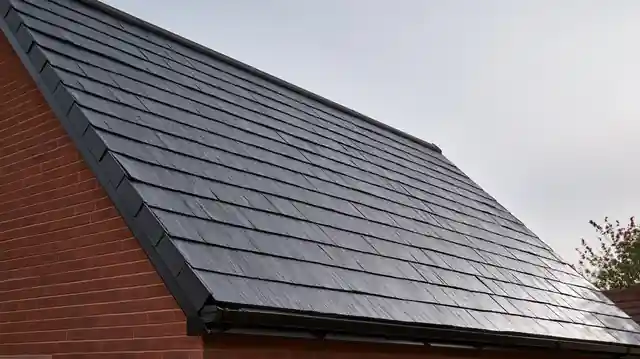
Fascias, Soffits & Guttering Basingstoke
Fascias, soffits and guttering repairs that keep your roofline working properly and your home protected.
Fascias, Soffits & Guttering for Basingstoke Properties
Fascias, soffits and guttering are part of the roofline system that helps manage rainwater and support the edge of the roof. When these parts begin to fail, problems can spread from a local defect to wider issues with damp, overflow or visible wear.
This page explains how the service is assessed, when repair may be suitable and when replacement is more practical. The aim is to help you understand the condition of the roofline before any work is specified.
A roofline problem does not always start with a major failure. Small cracks, loose sections or blocked drainage can create gradual issues that are easier to manage when they are identified early.
A clear assessment should look at the visible condition of the boards, joints and rainwater run-off so the right type of work can be chosen for the property.
Good roofline work should be based on what is actually happening at the edge of the roof, not on a guess. That means considering whether the issue is isolated, recurring or part of a broader deterioration.
Once the cause is understood, the response can be matched to the condition found, which helps avoid unnecessary work while still addressing the problem properly.
In some cases, a targeted repair is enough to restore function. In others, the better answer is to replace worn sections so the roofline performs reliably again.
The key is to judge each part of the system together, because fascia, soffit and guttering issues often affect one another rather than existing in isolation.
See how roofline work fits alongside our broader Basingstoke roof repair and roofline services.
Roofline and Guttering Work at a Glance
- Roof survey and visible-condition check
- Clear explanation of the likely cause
- Appropriate material and access considerations
- Written quotation for the proposed scope
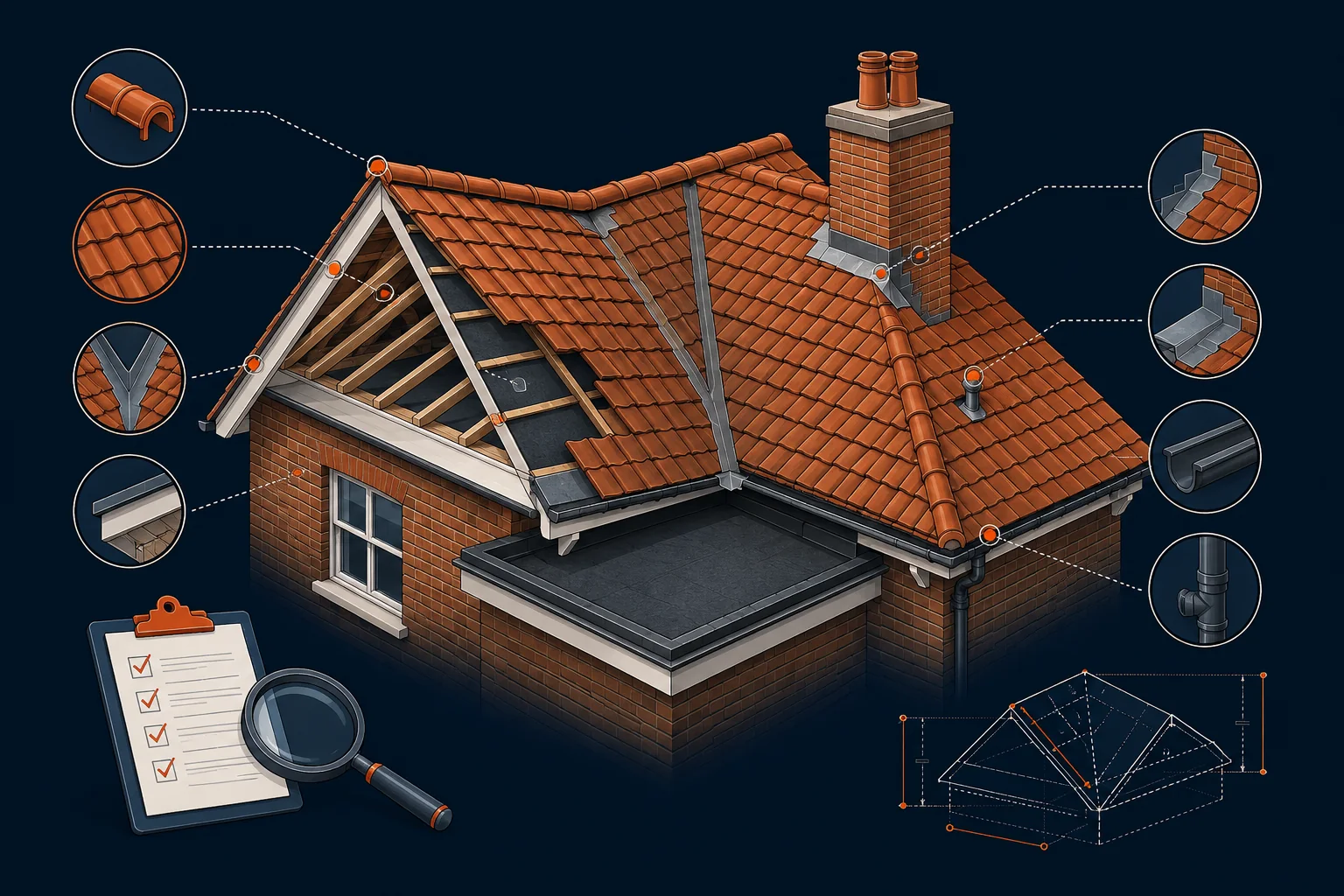
How We Assess Fascias, Soffits and Guttering
Before repair or replacement is specified, the roofline should be checked for visible wear, signs of movement, water run-off problems and any areas where previous work may have failed. A proper assessment also considers whether the problem is localised to one section or affecting a larger run of the roofline.
That inspection helps separate straightforward maintenance from work that needs a fuller scope. It also gives a clearer basis for deciding whether the existing materials can be retained or whether replacement is the more sensible option.
Inspect before specifying the work
Inspecting first helps avoid specifying work that does not match the real condition on site. A careful look at the roof edge, gutter line and supporting boards can reveal whether the issue is cosmetic, functional or structural in nature.
This stage is also useful for identifying whether the problem is caused by the roofline itself or by another part of the roof that is affecting it.
A visible defect can sometimes be the result of a hidden issue nearby. For example, a leaking joint, poor fall or movement in the surrounding parts may create symptoms that seem more extensive than they are.
That is why the inspection should consider the surrounding roof details as well as the roofline components themselves.
A sensible inspection looks for evidence of deterioration that could affect performance over time, not just what is immediately obvious. This makes it easier to plan work that is proportionate to the issue.
Where several defects are present, it is usually better to group them into one clear scope rather than deal with each symptom separately.
What guides the quotation
The quotation should reflect the condition found, the parts involved and the extent of any remedial work needed. It may also need to account for whether the job is a small repair, a partial replacement or a fuller roofline renewal.
A written quote is most useful when it clearly sets out what is included, so you can compare the proposed response with the actual findings from the inspection.
Assessment focus
- Check the complete roof edge
- Follow the rainwater route
- Protect required ventilation
Written scope
- Visible condition
- Safe access
- Material specification
- Relevant exclusions
Fascias, Soffits and Guttering Services
Fascias, soffits and guttering services can range from minor repairs to more involved replacement work, depending on what the inspection shows. The right scope is usually the one that addresses the cause of the fault as well as the visible symptoms.
A suitable response may include repair, replacement of damaged sections, or work to improve how rainwater is carried away from the roof. The final decision should follow the condition found on site rather than a fixed assumption about what the property needs.
Some jobs can be kept local to one section, while others are better handled as a planned run of work across the affected area. That depends on how much of the roofline has been compromised and whether the surrounding parts are still sound.
The aim is to restore dependable performance without extending the job beyond what the inspection justifies.
Where the existing roofline is still fundamentally serviceable, repair can be a practical option. Where deterioration is more widespread, replacement may offer a clearer long-term outcome.
Either approach should be chosen because it fits the condition, not because it is the most obvious first answer.
- Fascias, soffits and bargeboards are checked for sound support, junctions and ventilation.
- Gutter falls, joints and outlets are reviewed across the complete run rather than at one stain alone.
- Downpipes and discharge points are included so rainwater can leave the property correctly.
Fascias, Soffits and Bargeboards
Fascias form part of the roof edge and help support the guttering system. If they are damaged, rotten or loose, the rest of the roofline can be affected too.
Because of that link, fascia work is often considered alongside the soffit and guttering rather than as a completely separate task.
Soffits close off the underside of the roof edge and contribute to the overall finish and protection of the roofline. If they are broken or failing, they may need repair or replacement as part of a wider scope.
The right treatment depends on the condition of the board itself and whether related parts of the roof edge are still performing as they should.
Bargeboards can be part of the same external roofline area and may show wear at the same time as fascias and soffits. When this happens, it can be sensible to review the full edge together.
A joined-up approach helps keep the appearance and function of the roofline consistent across the affected sections.
Where roofline components are being renewed, the specification should make clear which parts are included and how the work connects to the rest of the roof edge. That avoids uncertainty later and helps the job proceed on a defined basis.
It is also important to distinguish between isolated replacement and wider refurbishment, especially where several elements are no longer in good condition.
A clear specification should describe the parts to be repaired or replaced and the standard of finish expected. That gives the customer a better understanding of what the work will achieve.
It also helps ensure the completed roofline matches the needs identified during the inspection.
- Confirm sound fixing points and the condition of underlying timber
- Maintain suitable airflow through the eaves where ventilation is required
- Form durable corners, joints and connections with the roof covering
Gutter Repair, Gutter Replacement and Downpipes
Gutter repairs are often suitable where the issue is local and the rest of the run remains sound. A leaking joint, misalignment or damaged section may be resolved without replacing the whole system.
The key is to confirm that the rest of the guttering can still perform properly once the defect is addressed.
If gutters are repeatedly overflowing, breaking down or failing in several places, replacement may be the more effective option. That can be especially relevant when the system no longer responds well to routine maintenance.
A replacement scope should be based on the overall condition of the run, not only on the most visible fault.
Downpipes should be checked as part of the wider rainwater system because they carry water away from the guttering. Damage or blockage here can affect the performance of the whole arrangement.
If a downpipe is failing, the work may need to include related gutter repairs so the system operates as intended.
Where rainwater is not being discharged correctly, the cause may lie in the guttering, the downpipe or the connection between them. That is why these parts are best assessed together.
This approach helps avoid replacing one component when the real issue sits elsewhere in the system.
Good rainwater management depends on the components working as a set. If one part is damaged or out of line, the resulting symptoms can appear in several places at once.
A well-scoped repair or replacement plan should therefore follow the path of the water as well as the visible damage.
- Check falls, brackets, seals and joints along the gutter length
- Confirm capacity and condition at outlets and changes in direction
- Trace downpipes to a suitable discharge point away from vulnerable masonry
Signs of Roofline Failure
Common signs of roofline failure include visible cracking, sagging, leaking joints and staining that suggests water is not being carried away correctly. These signs do not always mean full replacement is needed, but they do mean the area should be checked.
The earlier the problem is reviewed, the more options there are for keeping the work proportionate to the fault.
Changes in appearance can be an early warning that the roofline is no longer performing as it should. Loose fixings, gaps or sections that appear distorted may all point to a developing issue.
Even when the defect looks small, it can affect the wider rainwater system if it is left unresolved.
If a fault keeps returning after repair, that is often a sign that the underlying cause has not been fully addressed. In that situation, a more complete inspection is usually worthwhile.
Recurring problems are one of the clearest reasons to review whether repair remains the best option.
- Staining, dripping or regular overflow beneath gutter joints
- Sagging runs, loose brackets or movement at roofline connections
- Soft timber, peeling finishes or open fascia and soffit joints
Repair or Replace the Roofline?
Repair is often the right choice when the problem is local, the surrounding materials are still in good condition and the defect can be corrected without disrupting the wider roofline.
Replacement becomes more relevant when the same issues are spreading, returning or affecting several connected parts at once.
A straightforward repair can be cost-effective when it restores function and the rest of the system is still sound. However, it should not be used to postpone more extensive work when the materials are already deteriorating.
The decision should follow the condition of the whole roofline, not just the most recent symptom.
If the roofline has reached a point where several parts are failing together, replacement may provide a cleaner and more dependable result. That can reduce repeated call-backs and give the system a more consistent finish.
The right balance depends on whether the existing components are still supporting the roof edge effectively.
A practical way to decide between repair and replace is to compare the extent of damage, the likelihood of the same fault returning and the condition of the adjoining sections. Where the defect is isolated, repair may be enough; where deterioration is broader, replacement may be more sensible.
That judgement is best made after a full inspection rather than by looking at one part in isolation.
- Local repair for a failed seal, bracket or short sound section
- Partial replacement where damage is confined to one run or elevation
- Wider renewal where decay, movement or poor falls affect the complete system
Scoping Roofline and Rainwater Work
Condition
Condition is the starting point for any roofline recommendation. Surface wear, movement, broken sections and signs of water ingress all help show whether a simple fix or a larger scope is needed.
A condition-led approach keeps the work focused on what the property actually requires.
Access
Access can influence how the work is carried out and how much of the roofline can be reached safely and efficiently. It may also affect whether a small repair is straightforward or whether a larger section needs to be planned together.
When access is considered from the start, the proposed work can be organised more clearly and with fewer surprises.
Specification
Specification should bring together the findings from the inspection, the condition of the materials and the extent of the affected area. That creates a clear basis for the work and reduces uncertainty about what is included.
A good specification also helps distinguish between essential remedial work and any optional improvements that are not needed to solve the immediate problem.
Fascias, Soffits & Guttering FAQs
Guttering can overflow when water cannot move through the system as intended. Common reasons include blockage, poor alignment, leaking joints or a fault elsewhere that changes how the rainwater is discharged.
The cause should be checked rather than assumed, because overflow can be a symptom of several different problems.
Yes, a single gutter joint can often be repaired if the rest of the run is sound and the problem is limited to one point. A targeted fix may be enough when the joint has failed but the surrounding sections are still serviceable.
If the same area keeps leaking or the guttering is generally worn, replacement of that section may be the better option.
A fascia is the board fixed at the roof edge that helps support the guttering, while a soffit is the underside finish that closes off the roof overhang. They work together, but they have different roles.
Because they sit beside each other, damage to one can affect the other and should be assessed as part of the same roofline area.
Roofline should be replaced when the existing components are deteriorated enough that repair would only provide a short-lived result. Repeated failure, widespread damage or multiple weak points are common reasons to move from repair to replacement.
The best trigger is not age alone but the overall condition and how well the system is still performing.
Soffits may need ventilation where the roof design requires airflow at the eaves. If ventilation is blocked or not functioning as intended, it can affect the performance of the roof space and the roof edge.
Any changes should be planned carefully so the roofline still provides the right balance of protection and ventilation.
Ask about fascias, soffits & guttering
A written quotation should be based on what the inspection has found, how much of the roofline is affected and what level of work is needed to put it right. Materials, access and whether the job is a repair or replacement all shape the final scope.
That is why two similar-looking faults can still produce different quotes: the underlying condition, the parts involved and the amount of work required may not be the same.
If you are unsure whether your roofline needs repair or replacement, a written assessment is the clearest place to start. It gives you a better view of the condition, the likely scope and the most sensible next step.
Basing Roofworks can then quote for the work that matches the findings, rather than for a fixed assumption about what the roofline needs.